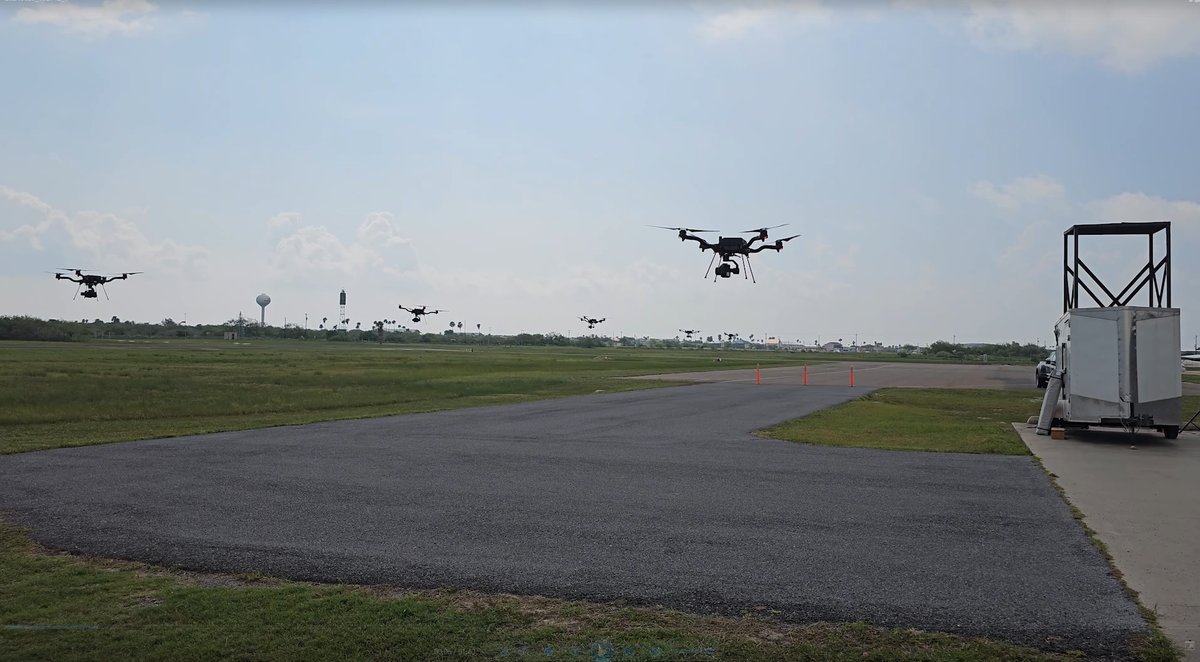
Tempest Droneworx™, a Houston-based Service-Disabled Veteran-Owned Small Business (SDVOSB), has announced the launch of Corvus MRDR™ (Modular Robotics Development & Reporting), a platform designed to radically change how autonomous systems are developed and tested. The announcement, made on August 18, 2026, promises to address the substantial time and financial burdens that developers face when moving from concept to real-world testing.
Autonomous developers traditionally must invest heavily in aircraft, crews, ranges, travel, weather contingencies, and hardware before they can even begin testing their algorithms. Corvus MRDR was built to eliminate these barriers, allowing engineers to test their own algorithms and control methods at scale, then progressively replace simulated vehicles with real ones without altering their existing workflow or relinquishing ownership of their intellectual property. This is a significant departure from current industry practices where developers often have to adapt to proprietary systems or wait for scheduled field tests.
The platform integrates simulated and physical drones through CROS (Corvus Robotics Operating System) and RAVN (Real-time Autonomous Vehicle Network). This integration enables incremental replacement of virtual aircraft with real ones in real-world coordinates, providing a seamless transition from pure simulation to live testing. As a result, developers can accelerate their time-to-market, reduce costs, and focus on innovation rather than logistics.
The importance of this announcement extends beyond mere convenience. By enabling safer and more efficient development of autonomous systems, Corvus MRDR has the potential to advance technology that improves public safety and quality of life. For instance, autonomous drones are increasingly used in search and rescue, infrastructure inspection, and delivery services, all of which benefit from faster and more reliable development cycles. The platform's platform-agnostic approach also means it can serve a wide range of customers, including commercial, academic, public safety, government, and defense sectors.
Tempest Droneworx, which serves these diverse markets, highlights that the key takeaway is the ability to test at scale without the prohibitive costs of field trials. This is particularly crucial for smaller companies and research institutions that may lack the resources for extensive physical testing. By preserving intellectual property, the platform also encourages innovation, as developers can keep their proprietary algorithms secure while iterating rapidly.
The full announcement, including downloadable images and bios, is available here. For more information about Tempest Droneworx and its other products, visit their website. The company, an SDVOSB, is committed to delivering operational insight from autonomous systems and sensor data.