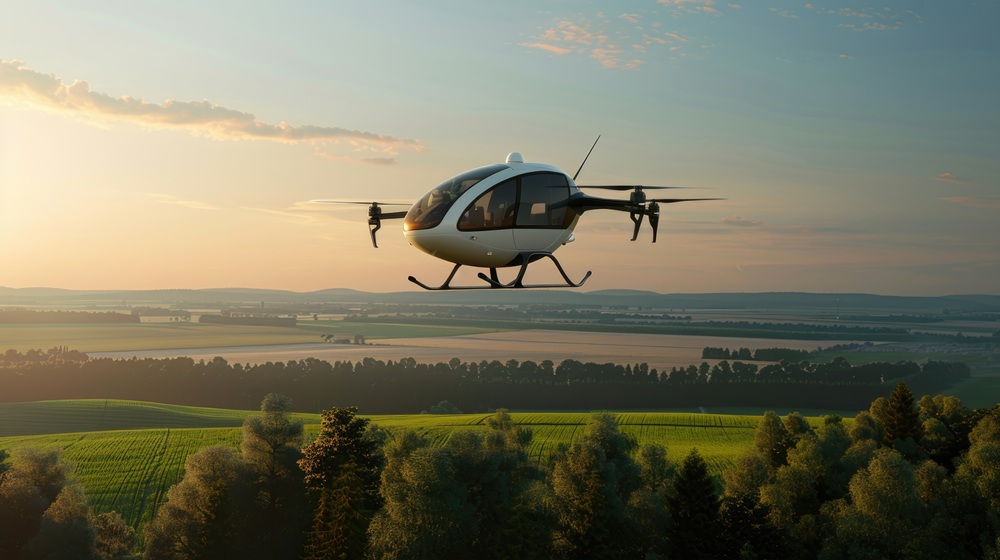
The recent Oshkosh Air Venture, which drew 700,000 attendees and 20,000 campers, showcased the largest assembly of electric aircraft ever, revealing that the electric aviation revolution extends far beyond the much-hyped flying cars and urban air taxis. According to Lisa Wright, founder of Landings, who attended both the main EAA event and the Vertical Flight Society's Electric Aircraft Symposium, the industry's focus on eVTOLs has overshadowed a more immediate and diverse market: the electrification of traditional aircraft.
Wright observed significant representation of electric vertical takeoff and landing (eVTOL) aircraft, but also noted a surge in conversions of conventional planes. "Cessna Caravans that land on water are being electrified. There were a lot of Pipistrels. Traditional aircraft that are being converted to electric as well," she said. These conversions, such as the electrified Beaver (eBeaver), are already operational and commercially viable, not just theoretical concepts awaiting certification. This expands the use case ecosystem immediately, covering emergency services, agriculture, and logistics.
The market's breadth was further underscored by companies like Air EV, an Israeli-based firm aiming to produce 30,000 aircraft annually, treating aircraft like cars. "They're really looking at it as basically wanting these sold like cars," Wright explained, noting that the new Mosaic rule has opened up opportunities for light sport and non-commercial aircraft. Similarly, Skyfly is pursuing Mosaic-level approvals, freeing them from traditional commercial restrictions. This production vision indicates a shift from boutique aircraft to automotive-scale manufacturing, which only makes sense if the market extends beyond urban air mobility.
A pivotal moment occurred during a presentation by Tim Jackson, author of "Dude, Where's My Flying Car," when a Beta aircraft took off outside, interrupting the talk. The audience rushed out to watch the conventional-wing Beta fly. Wright highlighted that Beta's aircraft had accumulated 60,000 miles, with their test fleet logging 175,000 miles. These are not just prototypes; they are generating operational data that informs certification and readiness.
Walking through the vast display of aircraft, Wright was struck by the diversity of designs, from 70-year-old planes to new ones. "Innovation has always meant every plane is so totally different," she observed. This suggests there is no single correct approach to electric aviation; the industry is in an experimental phase, which is typical of aviation innovation.
For infrastructure developers and communities, the implications are clear: the electric aviation market is expanding faster and broader than projected. It is not waiting for major eVTOL players to deliver. Conversions of existing platforms are already flying, and manufacturing plans are ambitious. The demand for charging and landing infrastructure is immediate, spanning rural networks for converted aircraft, emergency response, and agricultural applications. Landings is already building a network of over 2,000 rural vertiport locations, reflecting the near-term reality that electric aviation is arriving now, across multiple aircraft categories simultaneously.