Huawei's consumer business is doubling down on continuous innovation and self-reliance, as revealed by Richard Yu, Executive Director and Chairman of the Consumer BG, at an international media roundtable in Shenzhen. The company's strategic focus on five key scenarios—smart travel, office, home, fitness and health, and entertainment—aims to deliver a seamless AI life experience, setting the stage for its next decade of growth. This matters because Huawei's ability to innovate under pressure could reshape the global technology landscape, offering an alternative to US-dominated ecosystems.
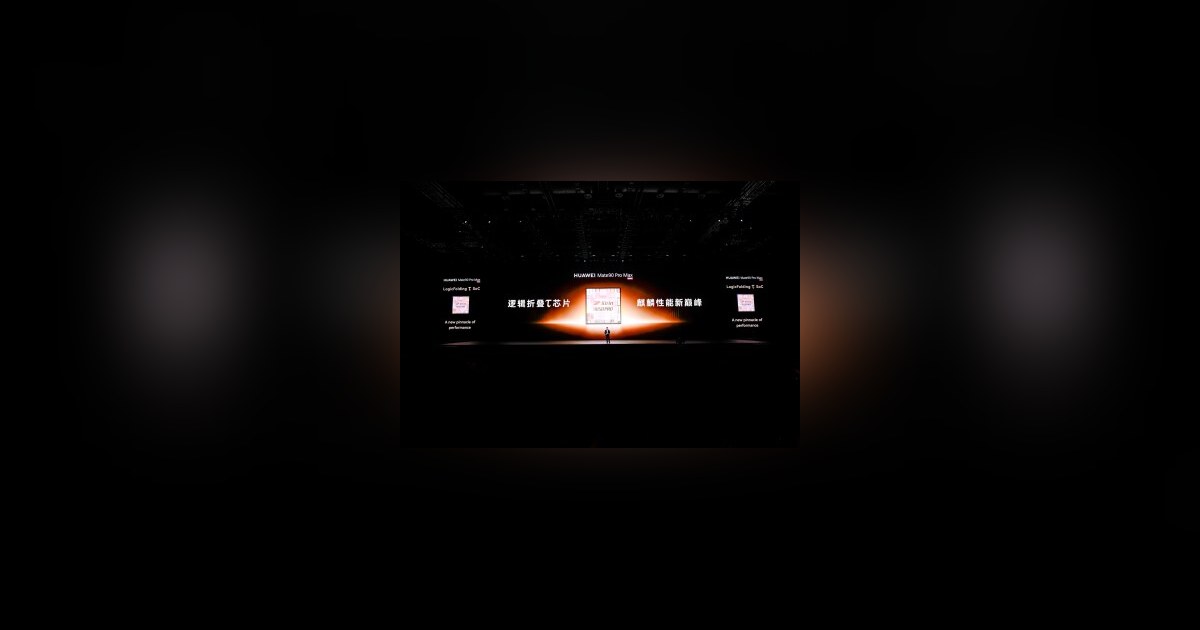
Between 2007 and 2025, Huawei invested over CNY1.8 trillion in research and development, with annual R&D spending rising from roughly 10% to over 20% of revenue. This massive commitment has yielded breakthroughs like the Kirin 9050 Pro chip, which powers the newly launched Mate 90 series. The chip boasts a 31% performance increase over its predecessor, thanks to Huawei-designed components including the Balong modem, image sensor processor, and Da Vinci architecture NPU. Significantly, Huawei's LogicFolding technology, unveiled by He Tingbo in May, vertically stacks logic layers to shorten critical paths and reduce latency. This innovation allows the Mate 90 to run a 30B MoE on-device AI model, showcasing Huawei's ability to sidestep advanced semiconductor process limitations. The implications are profound: Huawei is proving that with clever design and domestic supply chains, it can compete at the high end without relying on US technology.
HarmonyOS, Huawei's homegrown operating system, is central to this strategy. Launched in 2019, it now powers over 90 million devices, with expectations to hit 100 million by year-end. The ecosystem includes more than 450,000 apps and services, 11 million registered developers, and 23,000 app innovation partners. Yu expressed gratitude to partners and revealed plans to gradually bring HarmonyOS to the global market. This expansion could challenge the duopoly of iOS and Android, offering consumers and developers a third major ecosystem. For a deeper look at Huawei's technological breakthroughs, see the full Q&A session.
Globalization is another key theme. Despite setbacks since 2019, Huawei has built a domestic supply chain and eliminated dependence on US technologies. Yu noted that Huawei is No. 1 in wearables globally and is growing in TWS earphones, tablets, and CPE routers. While smartphone sales outside China are currently only a few million units annually, Yu revealed a step-by-step return to overseas markets. This resurgence, if successful, would intensify competition and provide more choices for consumers worldwide. The roundtable, covered by Media OutReach Newswire, underscores Huawei's determination to secure its competitive edge through innovation, with far-reaching implications for the tech industry.